For most student pilots, learning to fly begins with a fixed-wing aircraft. Fixed-wing planes are the foundation of private pilot license training because of their stability, low operational costs, and ease of operation for beginner pilots. Training on this type of aircraft not only helps students master essential skills but also prepares them for advanced certifications and learning on advanced aircrafts.
What Is a Fixed-Wing Aircraft?
A fixed-wing aircraft has wings that don’t move, instead relying on movement from the engine and air current. This type of aircraft is taught to student pilots during training for a private pilot license (PPL), as they are easier beginner aircraft to learn to operate. Fewer flight hours are required to operate a single-engine fixed-wing aircraft, before learning to fly commercial planes. In addition, it gives students the ability to master maneuvers on an easier aircraft first.
Characteristics of a Fixed-Wing Aircraft
A fixed-wing aircraft relies on aerodynamic properties to fly. The main characteristic that distinguishes a fixed-wing aircraft are the stationary wings. Unlike other types of aircraft, a fixed-wing aircraft’s wings do not rotate or move.
The wings of a fixed-wing aircraft contain a rounded top and flatter bottom, while the cross-section is shaped to create an airfoil. This allows air to flow under the wing and establish a lower air pressure above the wing to generate lift when the engine moves the plane forward.
Why Fixed-Wing Aircraft Are Used for PPL Training
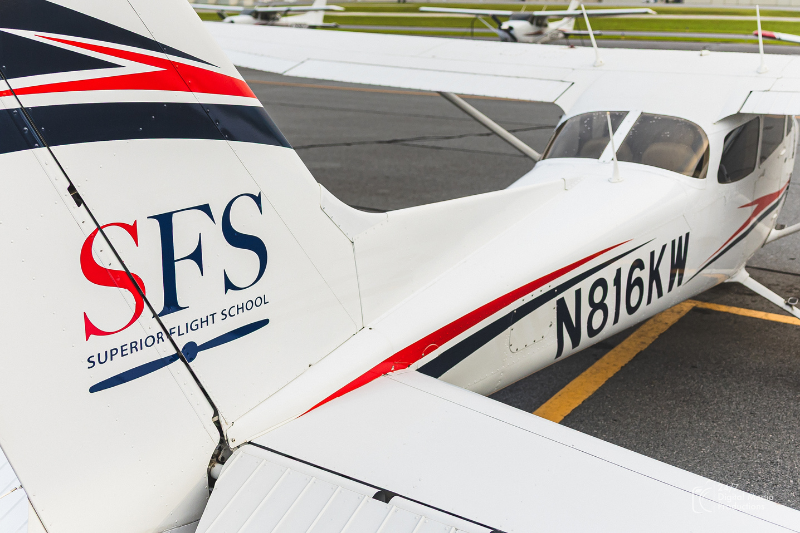
There are several practical and educational reasons why fixed-wing aircraft are used in PPL training. On the practical side, they tend to be lower cost to operate and maintain. Fuel costs are lower on a fixed-wing aircraft than on other types of aircraft commonly used in training programs. On the educational side, they are easier to learn how to operate for beginner student pilots. Since the PPL is the first pilot license a student can obtain, it is the ideal time to learn to operate this type of aircraft.
Superior Flight School trains students on several types of aircrafts in the Part 61 and Part 141 programs. Fixed-wing aircrafts are ideal for earlier in the training programs, before students obtain their private pilot license. It also helps them build flight hours to be used towards their licenses. But, to become a commercial pilot, students must also be trained on multi-engine aircrafts.
Training
Training on a fixed-wing aircraft begins with ground school, where students learn the fundamentals of aerodynamics, navigation, weather, and FAA regulations. Once in the cockpit, students practice essential flight maneuvers such as takeoffs, landings, climbs, descents, and turns. As proficiency develops, training expands to include cross-country flights, night flying, and handling emergency procedures.
At Superior Flight School, students benefit from structured training programs under both Part 61 and Part 141 FAA guidelines. Certified flight instructors guide students step by step, ensuring that each skill is mastered before advancing to more complex maneuvers. By the end of training, students not only meet the FAA’s flight hour requirements but also gain the confidence and judgment needed to fly independently.
Types of Fixed-Wing Aircrafts
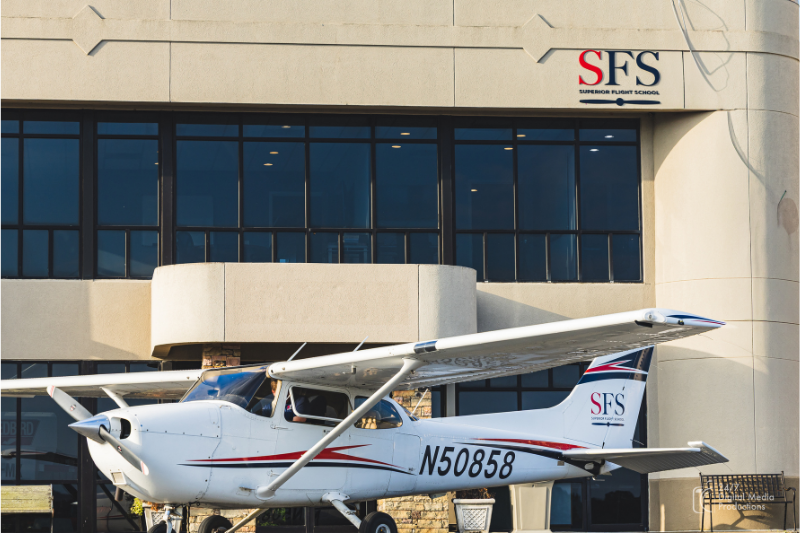
Fixed-wing aircraft used in training can vary depending on the program and student needs. The most common type is the single-engine piston aircraft, such as a Cessna 172, which is widely regarded for its reliability and ease of handling. For students preparing for advanced certifications, training may also include complex aircraft with retractable landing gear and constant-speed propellers, or multi-engine aircraft that introduce higher performance and more demanding flight operations.
These different aircraft types give students exposure to the range of flying experiences they will encounter as they progress from earning their private pilot license to pursuing advanced ratings and commercial certifications. Beginning with a fixed-wing aircraft allows pilots to build a solid foundation of flight skills that apply across all future training.