
All flight school students are required to go through several stage checks throughout their program. Stage checks are used to assess a student’s knowledge and skills. This evaluation gives the certified flight instructors leading the program an understanding of each student’s progress.
They are not something to stress about. With quality training and highly experienced CFIs by your side, you can go through each stage check with confidence, getting one step closer to a career in aviation.
Stage Checks in Part 141 Flight Training
Part 141 programs require stage checks under their FAA-structured curriculum. While the FAA does not require a set number of stage checks, there are usually several per course taken under the 141 curriculum. For example, the Multi-Engine Instructor Course (MEI) could have 2 stage checks, followed by an End of Course check.
Each stage check evaluates a different stage of the course. While one might focus on the multi-engine aircraft maneuvers, another might focus on showing understanding of the aircraft systems, such as fuel management and electrical.
Stage Checks in Part 61 Flight Training
Part 61 programs do not require stage checks. However, they are an excellent way to test the knowledge and skills of student pilots. Flight schools can still integrate stage checks into the curriculum, even through the more flexible curriculum that F.A.R. 61 offers. Students are aware in advance of any stage checks occurring throughout the training, so they can be best prepared to handle them with confidence.
What to Expect During a Stage Check
A stage check consists of testing the knowledge and skills of student pilots. Certified flight instructors will verbally assess a student’s understanding of their aircraft, procedures, and aeronautical knowledge. They may also ask for aeronautical decision making (ADM) based on scenarios given to them.
Stage checks also require testing a student’s flight skills. They may be tested on specific maneuvers either in the sky or using the FMX Redbird Full Motion AATD flight simulator.
Keeping up with a logbook throughout flight training is essential. The CFI conducting a stage check may review logbook entries, certifications, medical certificates, and endorsements that the student has.
Having frequent stage checks throughout training helps students prepare to present their progress, but it can also help prepare them to gain more confidence during checkrides.
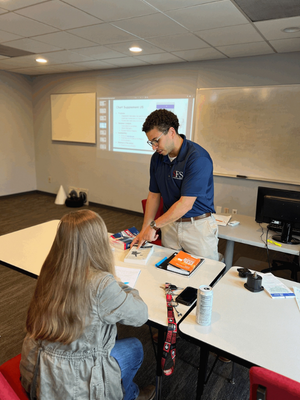
Stage Checks vs. Checkrides
Stage checks and checkrides are similar in the sense that they both test a student pilot’s understanding of their ground school curriculum and flight training.
A stage check is conducted by a CFI through the flight school. Although required by the FAA for Part 141, it is an internal process within the flight school that does not require a third-party assessor.
Checkrides are official FAA exams that must be conducted by Designated Pilot Examiner (DPE). Some flight schools need a DPE to come to the school to conduct checkrides for their students. Superior Flight School has self-examining authority, meaning there are designated check airmen right at the flight school, removing wait times often associated with external checkrides.

Stage checks prepare students for checkrides. While stage checks are conducted throughout training for each course in a program, checkrides are the final, official FAA test that a student has before being issued a new certificate, license, or rating.
How to Prepare for a Stage Check
Each day of flight training helps prepare a student for their stage checks. The stage checks assess how much a student understands the training that has been given to them. To best prepare for a stage check, students should review the course materials taught to them in ground school. This will help properly prepare them to answer any questions during the oral examination part of the stage check.
With experienced and quality CFIs, students should be best prepared for the flying assessment during a stage check. Throughout your lessons, your CFI will have the best understanding of how prepared your flying skills are for each stage check. That way, you can pass each one with confidence.