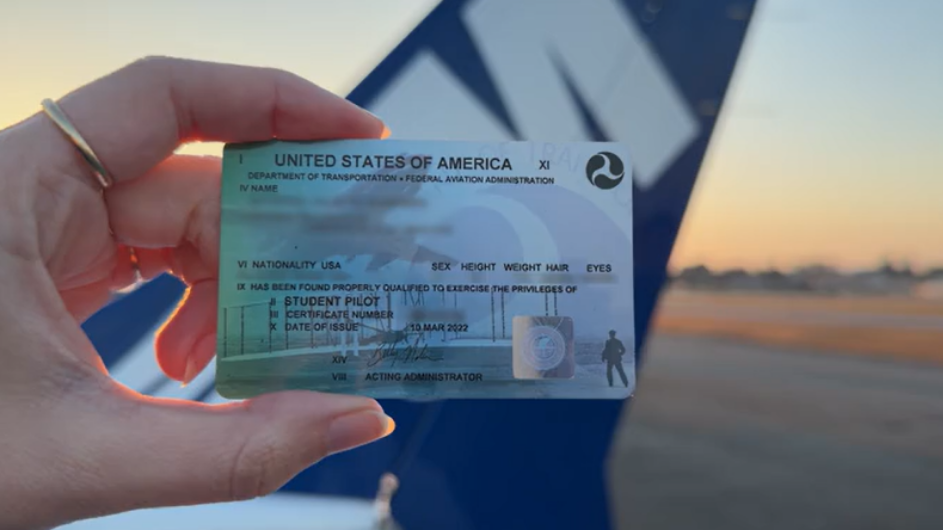
The student pilot certificate is an individual’s first step to taking to the skies when pursuing a career in aviation. It’s the credential that allows students to take solo flights during training. This is a major milestone for students on their path to obtaining a private pilot license, instrument ratings, commercial pilot license, and ATP license. Here’s a guide to everything you need to know about student pilot certificates.
How to Get a Student Pilot Certificate
Obtaining a FAA student pilot certificate is more straightforward than many future student pilots expect. The process involves meeting basic eligibility requirements, passing a medical exam, and submitting an application through the FAA’s online system. Superior Flight School and our certified flight instructors will guide every student through each step of the process. But, understanding the process ahead of time helps students hit the ground running from day one.
Student Pilot Certificate Requirements
To be eligible for a student pilot certificate, the FAA requires students to:
- Meet the pilot age requirement of being at least 16 years old
- Be able to read, speak, write, and understand fluent English, as this is the universal language of aviation
- Hold a valid FAA medical certificate issued by an Aviation Medical Examiner (AME)
The medical certificate requirement is worth planning for early. Depending on the class of medical certificate needed for a job as a pilot, the exam will assess vision, hearing, cardiovascular health, and overall physical fitness. Students with any pre-existing health conditions may want medical clearance early to ensure they are not disqualified from becoming a pilot before investing heavily in training. This eliminates any uncertainty in the future.
There’s no written knowledge test required to obtain the student pilot certificate itself, though students take a knowledge test later when pursuing a private pilot certificate.
Student Pilot Certificate Cost
One of the most common questions from aspiring pilots is about student pilot certificate cost, and the answer is encouraging: the certificate itself is free. The FAA does not charge a fee to issue a student pilot certificate.
The primary cost associated with this stage of training is the FAA medical exam, which typically runs between $75 and $200 depending on location and the Aviation Medical Examiner’s cost. Some AMEs charge more for third-class medicals that include a more thorough evaluation.
Beyond these upfront costs, ongoing expenses are tied to flight training hours, ground school, and materials, which are all detailed when initially committing to a flight training program.
Do Student Pilot Certificates Expire?
This is one of the most frequently asked questions among students planning their training timeline.
The answer depends on when the certificate was issued. Student pilot certificates issued by the FAA on or after April 1, 2016 do not expire. Older student pilot certificates issued before that date were subject to an expiration window of either 24 or 60 months depending on the student’s age at the time of issuance.
When applying for a student pilot certificate today or in the future, students don’t need to worry about expiration. That said, while the certificate itself doesn’t expire, the medical certificate does. All student pilots operating an aircraft must hold a valid medical certificate in order to use their student pilot certificate. Most third-class medicals are valid for 60 months for applicants under 40, and 24 months for those 40 and older.
Student Pilot Limitations
A student pilot certificate comes with specific restrictions designed to keep students and others safe while honing skills and building flight hours. Understanding student pilot limitations before flying solo helps students train with confidence.
The limitations to a student pilot certificate include:
- Student pilots may not carry passengers
- Student pilots may not fly in for a business
- Student pilots must have an endorsement from a certified flight instructor before flying solo, and additional endorsements are required for each new solo cross-country route and airport
- Student pilots may not fly in Class B airspace unless specifically endorsed to do so
- Student pilots must comply with any additional limitations a CFI places on their logbook
These restrictions aren’t obstacles but rather guardrails that structure progression. As you accumulate flight hours and demonstrate proficiency, an instructor will expand student privileges through endorsements until you’re ready for a private pilot checkride.
How to Apply for a Student Pilot Certificate
The application process runs through IACRA: the Integrated Airman Certification and Rating Application system. This is the FAA’s online portal for pilot certifications.
To apply for a student pilot certificate, students must:
- First, create an account at iacra.faa.gov. Once registered, a CFI will initiate the application within the system and help complete the required information. After the required medical exam is complete and the student’s AME has submitted the necessary documentation, the application moves through FAA review.
- Once approved, the student receives the student pilot certificate either electronically or by mail.
At Superior Flight School, our instructors walk every student through the IACRA process from start to finish. If you’re ready to take the first official step toward your commercial pilot certificate, we’re here to help you get there.