
Are you interested in going to flight school? This guide provides you with a first look at what a day in the life of a flight school student is like during training. Then, you can get a greater understanding of what to expect and how to best prepare for this next step towards an aviation career.
Part 61 Student Life
Part 61 flight school students train through an FAA-approved curriculum that offers more flexibility than a Part 141 program. This is ideal for students who want to train part-time or have responsibilities outside of flight school, while still wanting to pursue training towards licenses and ratings.
Starting the Day with Ground School
Flight school begins on the ground. While students may be excited to jump straight into an aircraft, ground school instruction is necessary to give students a greater understanding of regulations, safety requirements, and what to expect when they take to the skies.
A typical day in flight school begins with classroom instruction taught by certified flight instructors (CFIs). Students learn everything from aerodynamics and meteorology to FAA regulations. Not only is this important for the FAA written exams, but it also translates directly to in-flight training that students receive after ground school training.
If students are also going through in-flight training on the same day, the ground school training often covers what students will then apply to their flying lessons later in the day.
While the syllabus is FAA-approved, Part 61 does not follow the FAA-structured, more rigid syllabus that Part 141 students follow. This leaves more flexibility in the flight training day, depending on the needs of students.
Flight Training
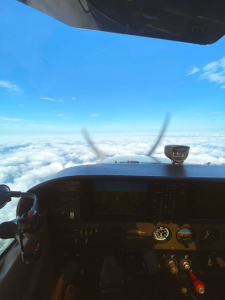
Most flight training is done with a CFI present in the aircraft, until students are approved for solo flights. This hands-on training covers skills and maneuvers including takeoffs, landings, turns, climbs, and stalls. Before every take off, students conduct pre-flight inspections of the aircraft. Students also learn how to handle taxiing.
Safety is at the core of flight training. Students learn how to handle any in-flight situation. For more hazardous in-flight situations, students also use flight simulators on the ground to practice how to handle certain maneuvers that may not be safe to practice in air at their level of training.
Schedule
A whole flight training day through Part 61 typically takes 2-4 hours.
The schedule for a Part 61 student can vary. Part 61 often attracts students that have responsibilities outside of training, but still want to pursue getting their licenses and ratings. This can mean anything from at-home responsibilities to maintaining a working job while in flight school. A Part 61 schedule is much more flexible than Part 141 and allows for part-time training. For this reason, the amount of time it takes to complete flight school for a Part 61 student varies.
Part 61 School-Life Balance
Part 61 students have a much better school-life balance, as they require more time away from flight training than a Part 141 student. This can, however, also lead to longer times getting through flight training and waiting longer to get licenses and ratings. Because of the more flexible schedule, students are often delayed in getting into a pilot career than those in a Part 141 program. But, during this time, students are able to more easily manage their life responsibilities alongside their flight training.
Part 141 Student Life
Part 141 students follow a rigid, FAA-structured syllabus. Training is broken up into several stages, each requiring a stage check by a CFI to progress into a new stage. These stages may include pre-solo training, navigation/instrument training, advanced maneuvers training, and final checkride preparation.
Starting the Day with Ground School
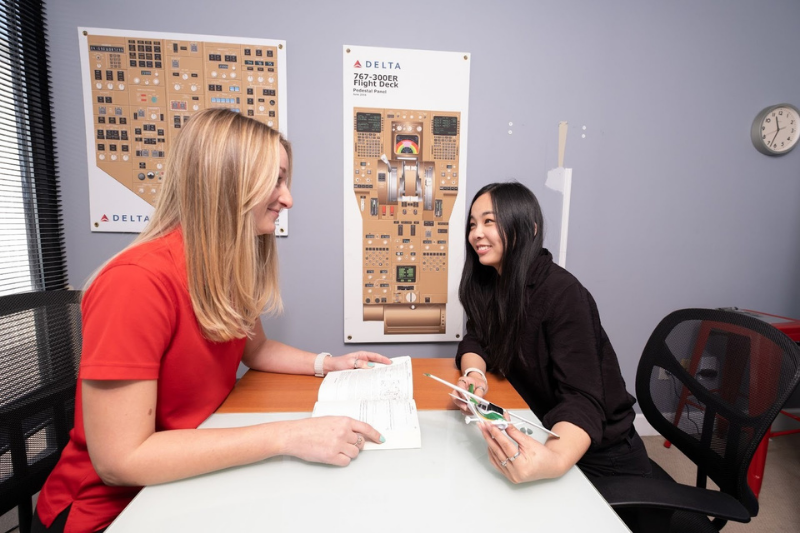
Like Part 61 students, Part 141 students begin their day in ground school. With Part 141, students may spend longer time in the classroom than Part 61 students, following the FAA-structured syllabus. While Part 141 and Part 61 students both learn the same fundamentals of flying in ground school, such as aerodynamics and weather, Part 141 guides students through a more specific schedule of lessons.
Flight Training
Flight training often takes up at least 1-2 hours of a day at flight school, depending on what stage of flight training a student is in.
Every student in Part 141 flight training goes through the same, step-by-step, rigid training outlined and approved by the FAA. Similar to Part 61 students, most of the time spent in in-flight training is alongside a CFI. In addition, also the same as Part 61 students, more complicated maneuvers are trained through flight simulators on the ground. Safety is in focus throughout each step of flight training.
Schedule
A part 141 flight training day typically lasts 8 hours.
Students who opt for a Part 141 program must commit to a full-time training schedule. This schedule is set by the FAA in their syllabus, meaning each student goes through Part 141 at the same pace. Because of this set pace, students must dedicate more time and commitment to Part 141 than Part 61 students. In doing so, students get a fully immersive experience that doesn’t take them away from training in between starting and obtaining their final licenses and ratings to become a commercial pilot. Students also complete the program much faster than students in a Part 61 program, jump starting them into their career in aviation quicker.
Part 141 School-Life Balance
Because of the dedication and commitment to a full-time flight training schedule, Part 141 students have less of a school-life balance than Part 61 students. It is more similar to attending college full-time. But, because of the stricter schedule, students are able to get into their careers as a pilot faster and build flight hours and experience faster than Part 61 counterparts.
The full school-life balance also depends on each individual student and their learning capabilities and pace of comprehension.
Pros and Cons of Flight Student Schedules
There is a flight training schedule for every student, depending on their needs. By offering both Part 61 and Part 141 programs, Superior Flight School understands that each student requires a different school-life balance. This opens up the doors of training towards becoming a commercial pilot to any student willing to take the time and commitment to go through training.
With any kind of specialized training, time is taken away from life to dedicate towards training and advancement. But, through more consistent training, students are able to retain their training better and shift their mindset towards a focus on their future career.
Choose a Flight Training Program That’s Right for You
The needs of each student are different. It’s important to choose a flight training program that suits your level of commitment and life responsibilities outside of flight school. For students who want to go through flight training fastest, an accelerated program is ideal. Those who want a full-time pace would benefit from a Part 141 program, and those who need the most time to slow the pace of their training benefit from a Part 61. Every program type offer students the opportunities to obtain each license and rating needed to become a commercial pilot.