
Night flying is one of the most rewarding experiences in aviation. It also comes with a distinct set of regulatory requirements that every pilot needs to understand before taking off after sunset. The FAA sets specific night flight requirements for student pilots, private pilots, and commercial pilots, each with different training minimums, currency rules, and equipment standards.
Understanding these requirements helps pilots stay legal, stay safe, and build the kind of well-rounded experience that strong aviation careers are built on.
What Does the FAA Count as Night Flying?
The FAA uses two separate definitions of night, each serving a different purpose, and it is important to know which one applies in a given situation.
For logging night flight time, the FAA defines night under 14 CFR 1.1 as the period between the end of evening civil twilight and the beginning of morning civil twilight, as published in the Air Almanac. Civil twilight ends when the center of the sun reaches 6 degrees below the horizon. Many electronic flight bag applications will calculate this time automatically for any location and date.
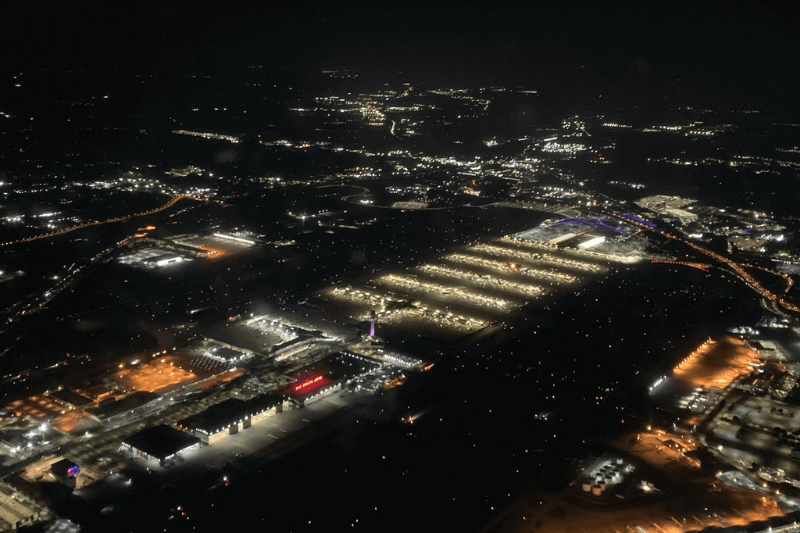
For operating aircraft lights and maintaining night currency to carry passengers, a different standard applies. Under 14 CFR 91.209, pilots must have their position lights on from sunset to sunrise. For passenger-carrying currency under 14 CFR 61.57, the FAA requires takeoffs and landings to be conducted between one hour after sunset and one hour before sunrise.
Knowing the difference between these two definitions matters when logging hours and when determining whether recent experience requirements have been met.
Night Requirements for Private Pilot
To earn a private pilot certificate, the FAA requires a minimum of 3 hours of night flight training in a single-engine airplane. That training must include one cross-country flight of more than 100 nautical miles total distance, and 10 takeoffs and 10 full-stop landings, each involving a flight in the traffic pattern at an airport.
After earning a private pilot certificate, night currency requirements apply any time a pilot wants to carry passengers after dark. A pilot must have completed at least 3 takeoffs and 3 full-stop landings at night within the preceding 90 days in the same category and class of aircraft. Those landings must occur between one hour after sunset and one hour before sunrise. Pilots flying solo at night are not subject to this currency requirement, but staying current is always the safer approach.
Commercial Pilot Night Flight Requirements
The commercial pilot night flight requirements are more demanding than those for a private certificate. A pilot applying for a commercial certificate with a single-engine airplane rating must log 5 hours in night VFR conditions, including 10 takeoffs and 10 full-stop landings in the traffic pattern at an airport with an operating control tower. The commercial pilot aeronautical experience requirements also include a 2-hour cross-country flight at night in a single-engine airplane, covering a total straight-line distance of more than 100 nautical miles from the original point of departure.
The higher bar for commercial pilots reflects the increased responsibility that comes with carrying passengers and cargo for compensation or hire. Building strong night flying skills during training is an investment in both safety and career readiness.
Student Pilot Night Flight Requirements
Student pilots are not permitted to conduct solo night flights without specific training and a written endorsement from a certified flight instructor. This is a separate requirement from the standard solo endorsement that allows daytime solo flight.
A student pilot may not operate an aircraft in solo flight at night unless they have received night flight training at the specific airport where the solo will be conducted. That training must cover night takeoffs, approaches, landings, and go-arounds, as well as navigation training in the vicinity of that airport.
The minimum visibility requirement for student pilots at night is 5 statute miles, which is stricter than the 3 statute miles required during daylight hours.
Getting an Endorsement for a Solo Night Flight
Before a student pilot can fly solo at night, their authorized flight instructor must provide a logbook endorsement specific to the make and model of aircraft to be flown. This endorsement is separate from the general solo endorsement and must cover night operations specifically.
The endorsement documents that the student has received the required night training and that the instructor has determined the student is prepared to conduct the solo safely. Night solo endorsements do not follow the same 90-day update cycle as standard solo endorsements in all cases, but student pilots should confirm the endorsement status with their instructor before each night solo flight. Flight instructors at Superior Flight School work closely with each student to ensure all endorsements are in place before any solo operation, day or night.
What Equipment Does Your Aircraft Need for Nighttime?
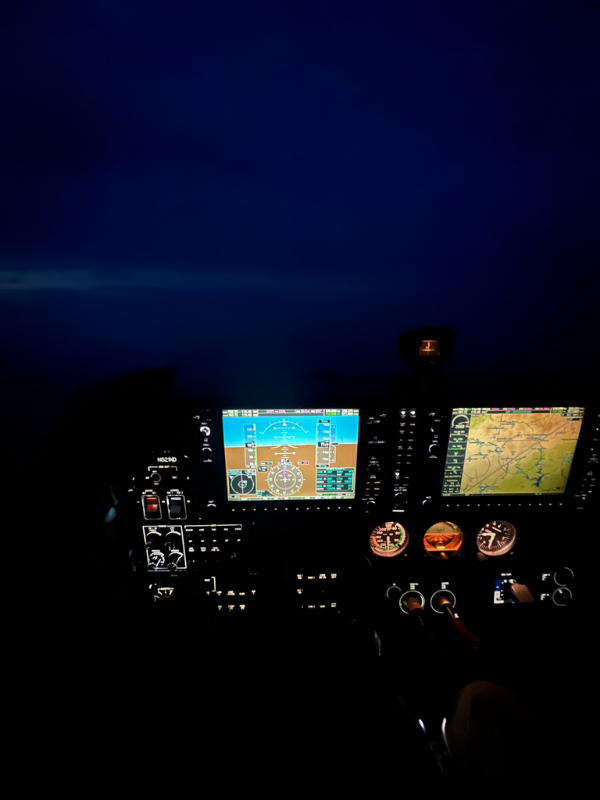
Before flying at night, pilots must confirm that their aircraft meets the equipment requirements outlined in 14 CFR 91.205(c). A common memory tool for night VFR equipment is the acronym FLAPS, which covers the items required beyond standard day VFR equipment:
- Fuses: A spare set of fuses, or at least three of each type used, must be accessible in flight.
- Landing light: Required only if the aircraft is operated for hire.
- Anti-collision light system: An approved red or white anticollision light, such as a rotating beacon or strobe system, is required.
- Position lights: Navigation lights consisting of a red light on the left wingtip, a green light on the right wingtip, and a white light on the tail.
- Source of electrical power: An adequate electrical power source must be present and functional to support all installed equipment.
In addition to the FLAPS items, the aircraft must also carry all of the standard day VFR equipment required under 14 CFR 91.205(b). A functional flashlight is also strongly recommended for cockpit reference and preflight inspections in low-light conditions, even though it is not specifically listed as a regulatory requirement.
Tips for Building Night Flight Hours and Experience
Night flight hours are a required part of both private and commercial pilot training, and building them efficiently requires planning and consistency.
The most straightforward way to build night hours is to schedule regular evening flights with a certified flight instructor during training. Pairing night training sessions with cross-country requirements allows students to meet multiple requirements in a single flight, particularly the cross-country night flight required for both the private and commercial certificates.
Staying current after certification is equally important. Pilots who let their night currency lapse before carrying passengers face the need to complete additional solo flights or dual training before resuming passenger operations at night. Scheduling a regular night flight every few weeks is a reliable way to stay current without having to restart the process.
New night pilots should also invest time in understanding the visual illusions that night flying introduces. Reduced depth perception, the black-hole approach illusion near unlit terrain, and the tendency to misidentify ground lighting as runway lighting are all known hazards that training and experience help a pilot recognize and manage.
Superior Flight School’s Part 141 and Part 61 programs ensure that all students training to become commercial pilots are trained for night flights that meet FAA requirements while building confidence and proficiency after sunset. For more information, contact the admissions team at admin@superiorflight.com.