Part 61 Pilot Courses
Part 61 flight training is ideal for students looking to fly through a flexible schedule. With an FAA-approved curriculum, students can progress through flight school at their own pace. This option is ideal for students who have commitments outside of flight training, including work or family commitments, and cannot train on a full-time schedule.
Applicants with prior flight experience are encouraged to contact us for a formal assessment to evaluate your existing hours and determine any additional training required to meet the minimum flight hour requirements.
F.A.R. 61 Course Curriculum
Part 61 Private Pilot Course
This certificate allows the pilot to operate an aircraft day or night under Visual Flight Rules (VFR). Passengers can be carried but not for compensation or hire. Minimum 40 hours of flight time as per FAR 61.109.
| Minimum Flight Time | 40 hrs |
|---|---|
|
Dual C-172S |
30 hrs |
|
Solo C-172S |
10 hrs |
|
Oral Single Engine |
20 hrs |
|
Written Exam |
|
|
Books |
|
|
Flight Exam |
Part 61 Instrument Course
This rating allows the pilot to operate under Instrument Flight Rule (IFR) as per FAR 61.65.
*Pre Reqs: 50 hrs of Cross Country Pilot in Command (PIC) time
| Minimum Flight Time | 40 hrs |
|---|---|
|
Dual C-172S (Glass Cockpit) |
20 hrs |
|
Redbird AATD |
20 hrs Max |
|
Oral Single Engine |
20 hrs |
|
Written Exam |
|
|
Books |
|
|
Flight Exam |
Part 61 Commercial Course
This certificate allows the pilot to fly for compensation or hire, given that the individual has met the industry requirements in order to be hired. Minimum 250 hrs of total flight time as per FAR 61.129.
*Pre Reqs: Private Pilot, 100 hrs of Pilot in Command (PIC) time and 50 hrs of Cross Country PIC time.
| Minimum Flight Time | 250 hrs |
|---|---|
|
Dual C-172S |
20 hrs |
|
C-172S TAA |
10 hrs |
|
Solo C-172S |
10 hrs |
|
Oral Single Engine |
40 hrs |
|
Written Exam |
|
|
Books |
|
|
Flight Exam |
Part 61 Additional Aircraft Multi Engine Course
This Additional Aircraft Multi-Engine Land Instrument rating allows pilot to operate a multi-engine aircraft. The rating may be added to a Private Pilot Certificate or a Commercial Pilot Certificate, meeting the requirements listed in FAR 61.63.
*Pre Reqs: Private Pilot or Commercial Pilot
| Minimum Flight Time | 15 hrs |
|---|---|
|
Dual PA-34 |
15 hrs |
|
Oral Multi Engine |
15 hrs |
|
Books |
|
|
Flight Exam |
Part 61 Certified Flight Instructor
(CFI) Course
This certificate allows the holder to train pilots for single engine certificates and ratings. Applicants for this certificate must hold a Commercial Pilot Certificate or an Airline Transport Pilot (ATP) certificate as per FAR Part 61 Subpart H.
*Pre Reqs: Commercial Single-Engine License
| Minimum Flight Time | 15 hrs |
|---|---|
|
Dual C-172S |
15 hrs |
|
Oral Single Engine |
20 hrs |
|
Written Exam |
|
|
Books |
|
|
Flight Exam |
Part 61 Certified Flight Instructor Instrument (CFII) Course
This certificate allows the holder to train pilots for single engine certificates and ratings. Applicants for this certificate must hold a Commercial Pilot Certificate or an Airline Transport Pilot (ATP) certificate as per FAR Part 61 Subpart H.
*Pre Reqs: Commercial Single-Engine License
| Minimum Flight Time | 15 hrs |
|---|---|
|
Dual C-172S |
15 hrs |
|
Oral Single Engine |
20 hrs |
|
Written Exam |
|
|
Books |
|
|
Flight Exam |
Part 61 Multi-Engine Instructor
(MEI) Course
This certificate allows the holder to train pilots for single engine certificates and ratings. Applicants for this certificate must hold a Commercial Pilot Certificate or an Airline Transport Pilot (ATP) certificate as per FAR Part 61 Subpart H.
*Pre Reqs: Commercial Multi-Engine License
| Minimum Flight Time | 15 hrs |
|---|---|
|
Dual PA-34 |
15 hrs |
|
Oral Single Engine |
20 hrs |
|
Written Exam |
|
|
Books |
|
|
Flight Exam |
Are You a U.S. Veteran? Flight Train Under the GI Bill®
United States veterans may be eligible to use their GI Bill® benefits toward flight training at Superior Flight School. Our Part 61 flight training program is approved for VA vocational benefits. Earned through military service, these benefits can help fund the path to becoming a professional pilot.
Visit our Financial Opportunities page to learn more about flight training under the GI Bill®.
Earn a College Degree During Flight School
While you don’t need a college degree to become a commercial pilot, some students receive their bachelor’s degree to help get more competitive jobs in aviation post-flight school. Through our collegiate partnerships, student pilots can work towards a Bachelor’s degree while completing Part 61 flight training at Superior Flight School.
Learn more about the universities we work with and how they work together with our Part 61 pilot program:
Frequently Asked Questions
What is the Part 61 program?
A Part 61 flight training program teaches students to become a pilot through an FAA-approved curriculum: from training for a Private Pilot License (PPL) all the way through obtaining an Airline Transport Pilot (ATP) License. Unlike Part 141, Part 61 allows each student to train at their own pace. It is ideal for students who are looking to become a pilot but can only commit part-time to the program due to work, family commitments, schooling, or other obligations outside of flight school.
Part 61 does not use the FAA-structured curriculum that Part 141 does, meaning students can go through flight training at a pace that suits their learning capabilities.
Do Airlines Prefer Part 141 versus Part 61?
Airlines hire pilots from both programs, as they both obtain the same licenses and ratings required to become a commercial pilot. The Part 61 program is ideal for students who need a longer amount of time to get through flight school based on their learning pace or commitments outside of the program. While this does not impact the ability to get hired, it impacts the pace at which students obtain their licenses to begin applying for jobs.
What aircraft do I fly in the Part 61 program?
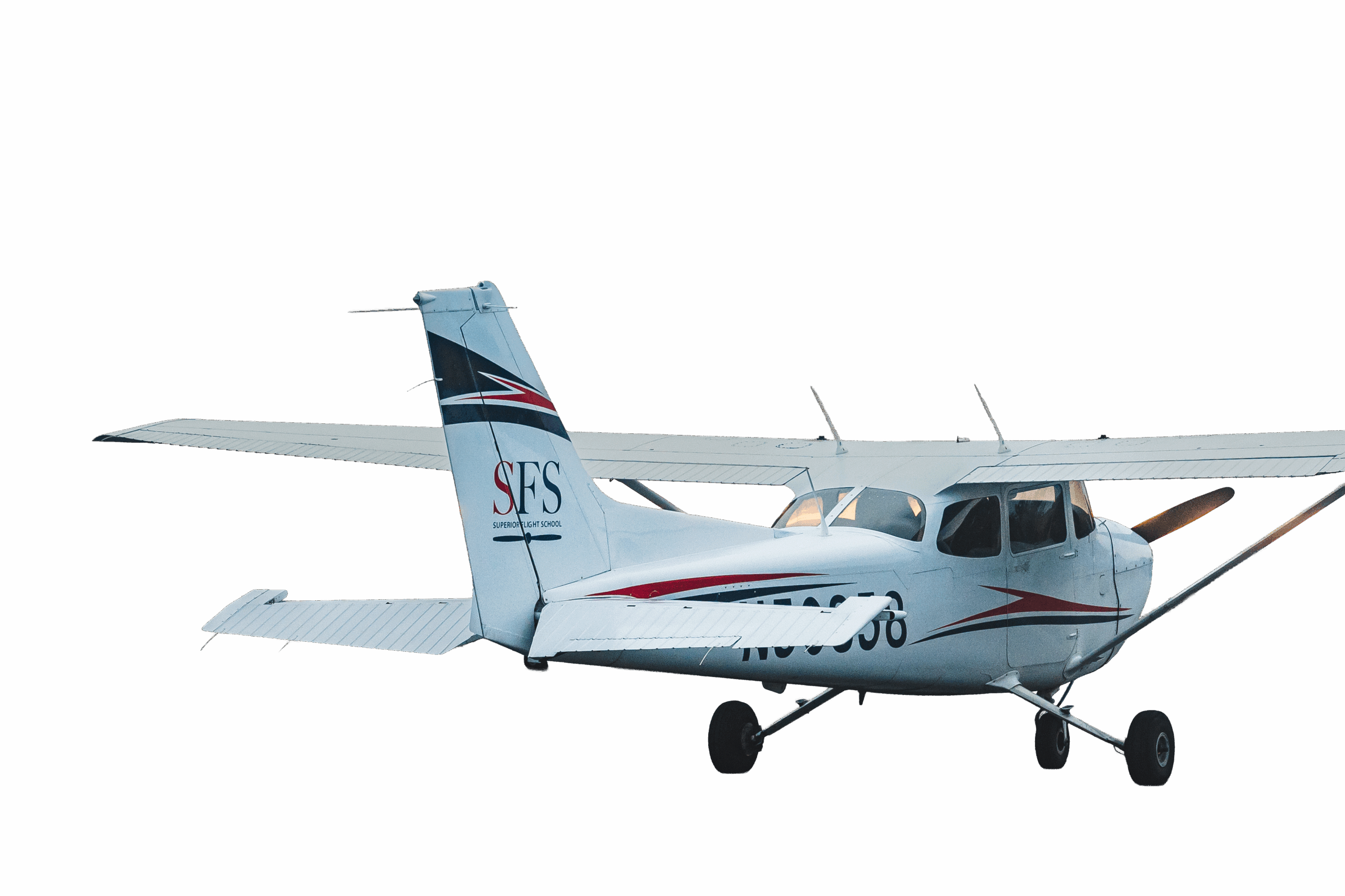
Superior Flight School operates a fleet of Cessna 172 Skyhawks and a Piper Seneca, equipped with a G1000 Glass Cockpit avionics system. Student pilots are able to receive hands-on training essential to obtaining licenses and ratings needed for a career in aviation.
How far is Superior Flight School from Atlanta?
Superior Flight School is based at Cobb County International Airport near Kennesaw, Georgia. This is only about a 30-45 minute drive from Atlanta, Georgia, depending on your starting point in the city. Student pilots benefit from training near Hartsfield-Jackson Atlanta International Airport (ATL), the busiest airport in the world, giving students exposure to complex airspace that prepares them for real-world flying conditions while being far enough away from the busy airspace to make flight training safe and efficient.